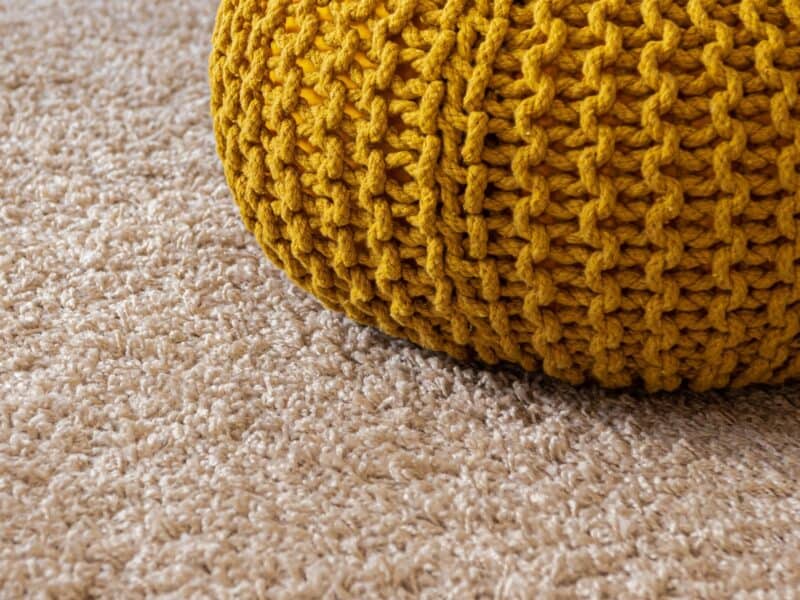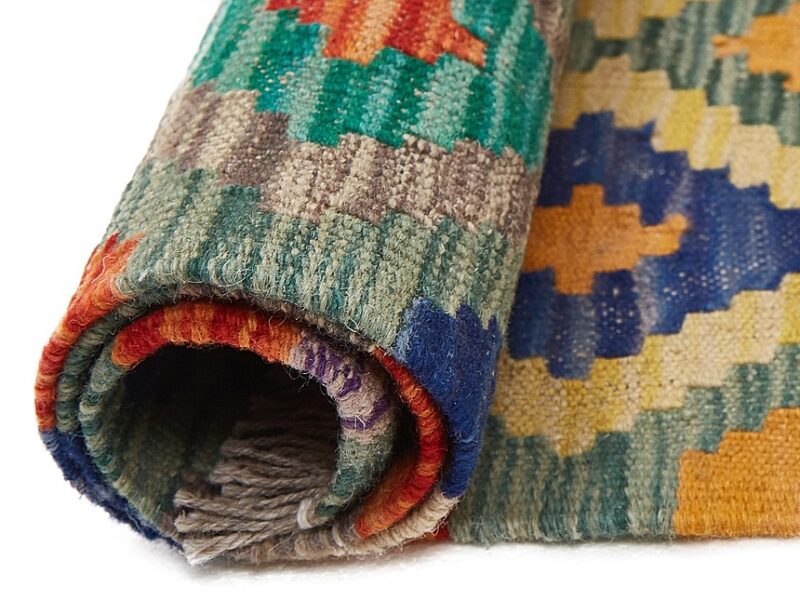

For many, carpet still represents the ultimate in luxury, style and comfort, despite its higher maintenance and lower durability.
Modern design and technology means that there is now a carpet to suit almost every taste, budget and lifestyle and choice can sometimes be difficult!
Quality
To determine the Quality of a Carpet, you have to look at its density and pile. Density refers to the thickness of the pile yarn and how close the tufts are to each other.
High density is preferred with ideally so many fibres grouped in each square inch that it is hard to insert a finger down to the mesh. In general, it is considered that the denser the pile, the better quality the carpet.
Higher quality carpets also have better adhesive attaching the fibres to the mesh backing and a more superior foam padding between the carpet and the subfloor.
High grade carpets also have greater longevity, wearing well and looking good for up to 15 years. In general, carpets start to look “tired” when the twisted fibres in the pile relax and fall out.
Texture/Style
Carpet texture and subsequently, its style, is largely dependent on the type of pile that is used in its construction. If the piles are left in the traditional uncut loops, this gives a more casual look and is also more hard-wearing, making it ideal for active families with children and pets.
The loops can be at a single height or multi-level which creates patterns in the carpet.
For a more tailored, formal look, choose cut pile carpets. Here the loops have been cut, leaving individual tufts of yarn. Cut pile carpets come in three textures:
- Plush (or velvet) is very dense and the most soft, smooth and luxurious
- Saxony is also smooth but with slight twisting to the yarns, giving a more textured look which makes the carpet more resilient to weight and traffic
- Frieze has a very curly, textured surface as its yarns have been twisted and heat set – this makes it highly durable and resilient as well as good for hiding soiling, although it looks the least formal.
Carpets can also be a mix of cut and loop styles, which gives good textured detailing, particularly for the creation of patterns and sculptured effects.
Note that cut-pile carpets have a greater tendency to relax and thus look “tired” quicker, as well as a greater likelihood of the colour and brightness fading over time.
Fibres
Carpet fibres come in two main groups: natural and synthetic. Natural fibre generally means wool, which is particularly suitable for carpet as it not only looks good but lasts well and is not flammable nor prone to static.
Silk and jute is also sometimes used, mainly in high quality, hand-made rugs, and carpets can also be made from coir (a natural fibre from coconut husks) and flax.
Synthetic fibres cover a wide range including polyester, acrylic, polypropylene, nylon and viscose. They are generally more durable and much more stain- and soil- resistant than natural fibres – on the other hand, they are more flammable and more prone to static.
- Acrylic is a popular synthetic substitute for wool as it gives the same look and feel but has greater resilience and is less pricey. It also has the advantage of being moisture- and mildew-resistant.
- Polyester is used in a lot of luxury styles as it gives a luxurious, soft look, especially when used in thick, cut-pile styles. However, it has less resilience and is more prone to flattening from heavy traffic and furniture.
- Nylon is incredibly popular as it is durable, colourfast, stain-resistant and resilient to soiling and matting. It is often blended with wool to improve the latter’s resilience.
- Polypropylene (also known as olefin) is often used for outdoor areas and recreational facilities as it is very resistant to wear and tear and also to permanent staining, as well as moisture and mildew, while still remaining colourfast.
- Viscose is the budget choice, with much lower resilience but as it is made of a cheaper fibre, it provides an affordable option for those who would still like to have fitted carpets.
Maintenance and Care
Most modern carpets, especially the synthetic versions, require little more on a regular basis than a good vacuum and quick attention to any Stains, Spills and Soiling that occur.
Stains should generally be tackled by scraping or blotting off any excess solids or liquids and then rinsing with water and blotting with absorbent white paper.
Detergent should be avoided as it can set into the carpet and make it more prone to staining and soiling in the future. Avoid hot water as well as heat will set any stains.
Whatever the type of carpet, a thorough deep clean is recommended annually, either by professional carpet cleaners or using a hired DIY cleaning machine.
Common methods for deep cleaning include steam cleaning and hot water extraction although ultimately, the method chosen depends on the type of carpet you have. It is best to check with manufacturers and follow their instructions.
See Also